
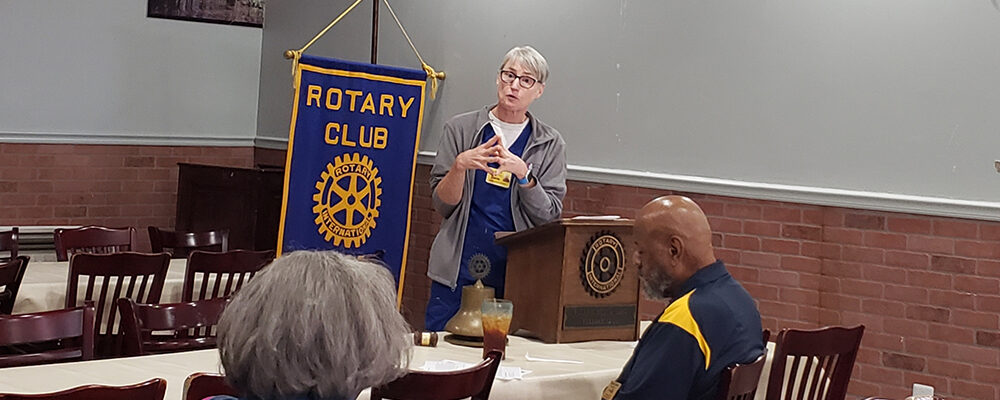
While COVID-19 is still a hot topic in public health, a new transmittable disease – monkeypox – is causing concern across the nation and world. On August 16, 2022, Dana Bellefontaine, Infection Preventionist and Employee Health Coordinator at Regional Medical Center, gave an update and valuable information on the monkeypox outbreak during the regular weekly meeting of the Rotary Club of Baker.

Monkeypox is a rare disease caused by infection with the monkeypox virus. Monkeypox virus is part of the same family of viruses as variola virus, the virus that causes smallpox. Monkeypox symptoms are similar to smallpox symptoms, but milder, and monkeypox is rarely fatal. Monkeypox is not related to chickenpox.
Monkeypox was discovered in 1958 when two outbreaks of a pox-like disease occurred in colonies of monkeys kept for research. Despite being named “monkeypox,” the source of the disease remains unknown. However, African rodents and non-human primates (like monkeys) might harbor the virus and infect people.
The first human case of monkeypox was recorded in 1970. Prior to the 2022 outbreak, monkeypox had been reported in people in several central and western African countries. Previously, almost all monkeypox cases in people outside of Africa were linked to international travel to countries where the disease commonly occurs or through imported animals. These cases occurred on multiple continents.
Belfontaine spent most of her presentation explaining how the virus differs from other diseases and the best ways to avoid contracting and transmitting monkeypox. She said the virus can live on surfaces for 15 days and can be transmitted through close contact with the bodily fluids of an infected person. Like many other diseases, handwashing and surface cleaning of contaminated items is very important.
Bellefontaine has worked at Lane for 31 years and was named Lane Regional Medical Center’s 2020 MVP of the Year. She was recognized for her dedication and tireless efforts during the Covid-19 infection control response at the hospital and clinics.
For more information on monkeypox, visit
